Part of the “Synthetic Data in Healthcare” blog series by Aindo.
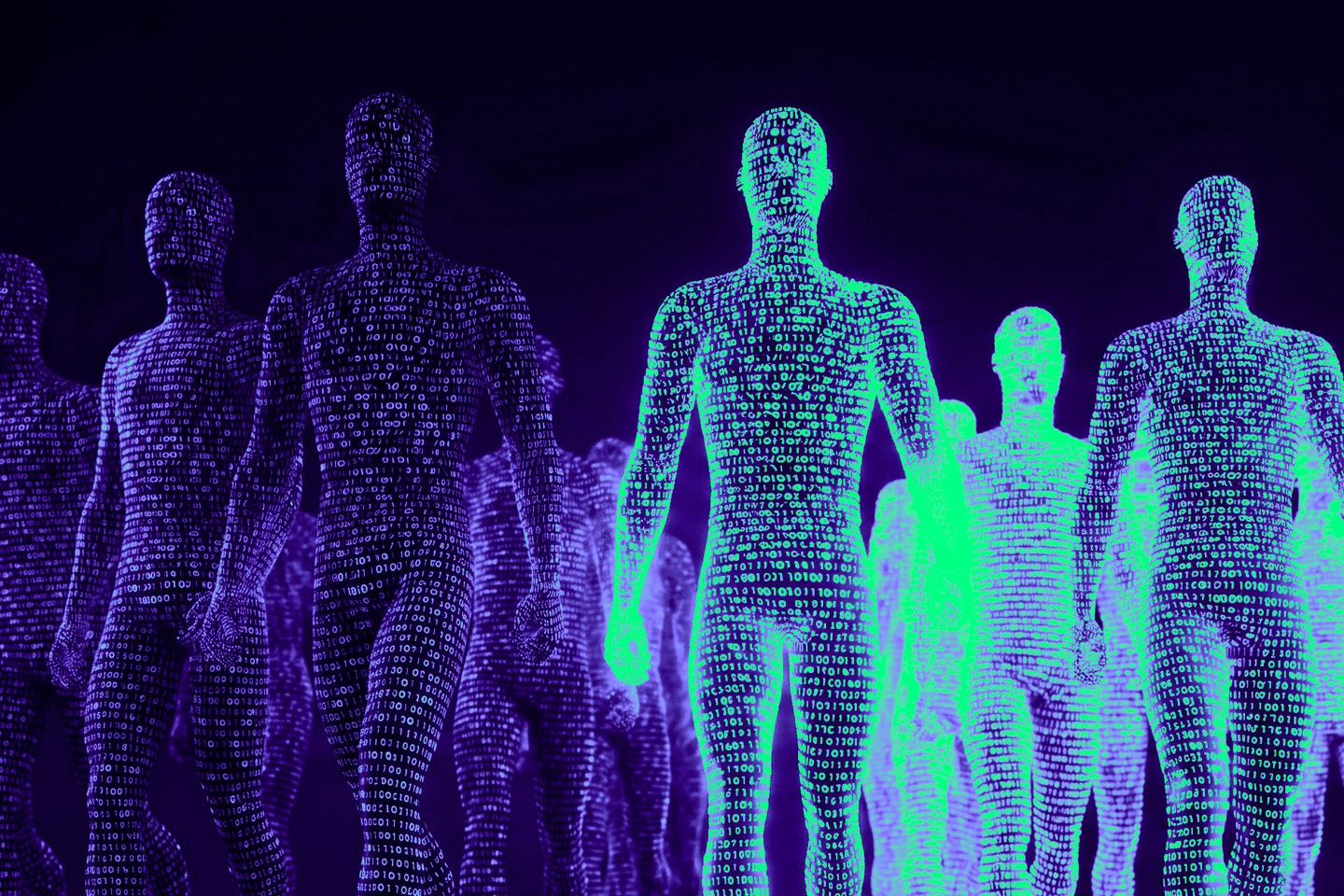
Imagine being able to simulate how a patient will respond to a treatment in a fully virtual environment. With
synthetic digital twins, this vision is coming closer to reality.
In the final post of our series, we explore how synthetic data is laying the foundation for digital twins in
healthcare – AI-powered virtual patients that could transform precision medicine, clinical trials, and care delivery.
What is a digital twin?
A digital twin is a virtual model that mirrors a real-world system. In industry, digital twins have been used for
years to simulate complex systems – for example, a digital twin of an aircraft is a dynamic virtual replica that is
continuously updated with real-time sensor data. Engineers use this live digital model to test scenarios, detect
anomalies, optimize performance, and even predict maintenance needs before problems occur.
In healthcare, the ambition is even greater: to build a realistic, dynamic model of a person’s health, including
conditions, treatments, and outcomes.
These digital twins could eventually:
- Predict disease progression.
- Simulate drug responses.
- Optimize treatment plans.
- Enable fully virtual clinical trials.
But building digital twins requires rich, diverse, and compliant data – something the healthcare system still
struggles to provide.
How synthetic data powers digital twins in healthcare
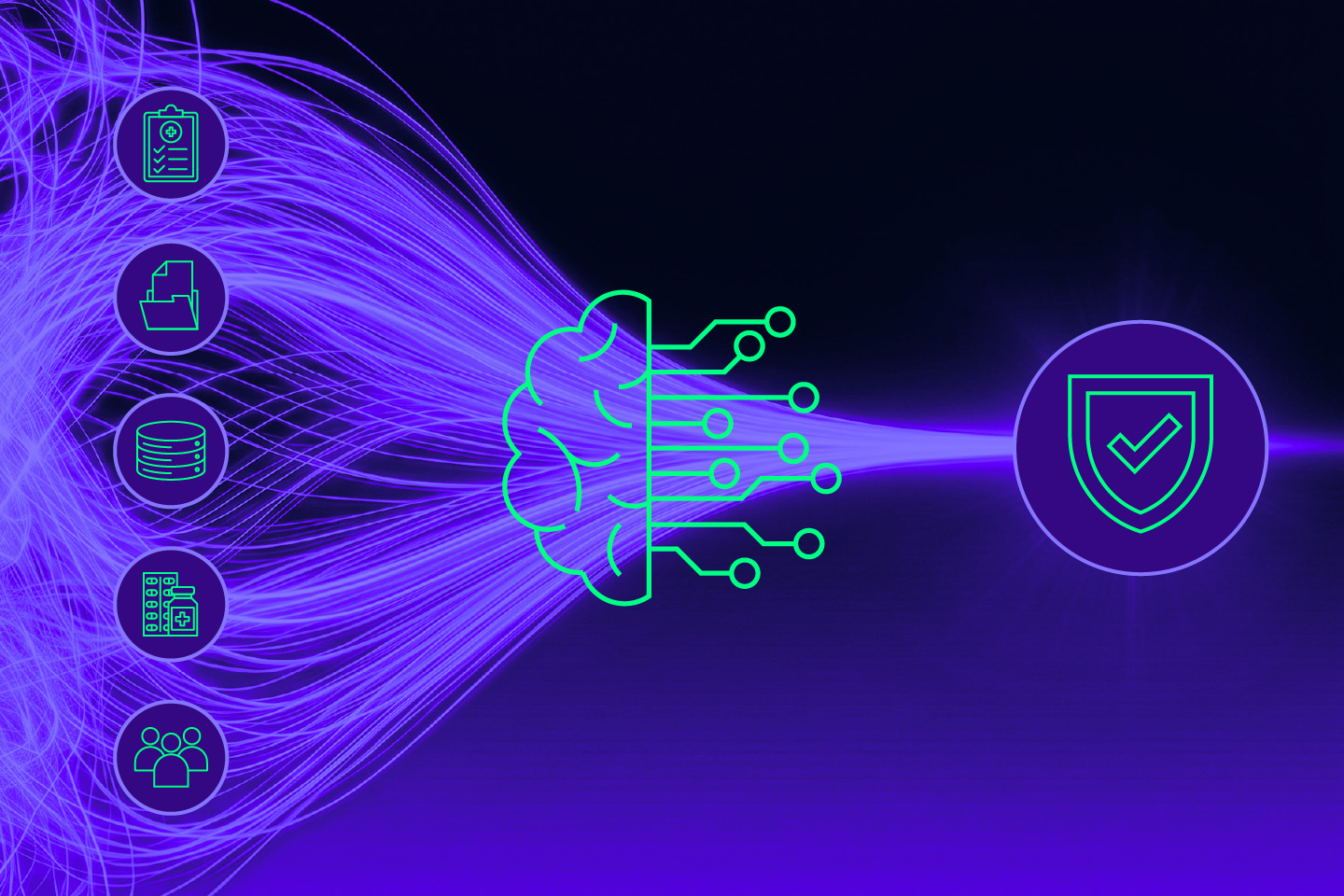
Real patient data is often fragmented, incomplete, or inaccessible due to privacy concerns. That’s where synthetic
data comes in: it provides high-fidelity datasets that reflect the complexity of real patient journeys, without
exposing identifiable information.
Because synthetic data can replicate real-world variability, correct demographic imbalances, and scale beyond
consent-restricted datasets, it forms a powerful foundation for building digital twins. The result is a virtual
patient model that is both scientifically robust and operationally flexible.
From synthetic cohorts to personalized digital twins
The journey starts with synthetic cohorts – statistically representative populations generated for research, AI
training, or the creation of synthetic external control arms in clinical trials. These cohorts allow teams to explore
trends, identify risk factors, or test algorithm performance without relying on protected health data.
As modeling advances, we can move toward personalized digital twins: virtual replicas that capture a patient’s
unique clinical characteristics. Such twins could allow clinicians to test treatment strategies in silico before
applying them in practice, anticipate complications, or simulate disease progression under different scenarios. The
result is a safer, faster, and more adaptive approach to care.
Applications on the horizon
Synthetic-data-powered digital twins have the potential to transform multiple areas of healthcare research and
delivery, including:
- Drug development, by reducing trial size and duration through synthetic control arms and virtual experimentation.
- Precision medicine, by identifying the optimal treatment pathway for individual patients based on simulated outcomes.
- Clinical trials, by enabling adaptive, virtual-first trial designs that reduce patient burden and accelerate enrollment.
- Public health, by modeling outbreaks, resource needs, and intervention impacts at population scale.
Regulatory pathways are opening
Italy’s landmark AI law (Articles 8 and 9) explicitly supports synthetic data for healthcare research, paving
the way for innovations like digital twins. At the European level, regulatory sandboxes and frameworks such as the
Europrivacy certification offer compliant routes for experimentation and validation of this emerging technology.
Aindo’s vision
At Aindo, we see synthetic digital twins as the next frontier of responsible AI in healthcare. Our advanced
generative AI models learn clinical patterns across time, patient subgroups, and disease trajectories. By combining
this capability with rigorous privacy and regulatory alignment, we are building the technological foundation for safe,
ethical, and future-ready virtual patient systems.
We are already partnering with research institutes, hospitals, and life-sciences companies on digital-twin initiatives.
For example, in our work on synthetic digital twins for Parkinson’s disease,
we help researchers model deep-phenotyped synthetic patients to identify which subgroups may benefit most from specific
therapies - a first step toward true precision medicine.
The future is closer than you think.
Let’s shape the future of healthcare together
Are you a researcher, clinician, policymaker, or innovator interested in building the next generation of healthcare?
Let’s connect and explore your vision.
Missed the rest of the series? Catch up with our previous blogs on
AI development in healthcare,
real-world evidence,
and clinical trials.